

As the weather warms and we begin spending more time outside, tick season also begins to pick up. Whether you’re gardening, walking the dog, hiking, playing in the yard, or simply enjoying the longer days, it’s helpful to know what to look for and what to do if you find a tick.
Ticks are found across the United States, and the specific risks can vary depending on where you live. Here in Maine, late spring and early summer are especially important because this is when nymph ticks are most active. Nymph ticks are extremely small—often about the size of a pinhead or poppy seed—which makes them very easy to miss. They are also responsible for the majority of Lyme disease transmission.
In this guide, we’ll cover what to know about tick season, Lyme disease prevention, proper tick removal, testing options, and supportive care to consider if a bite occurs.
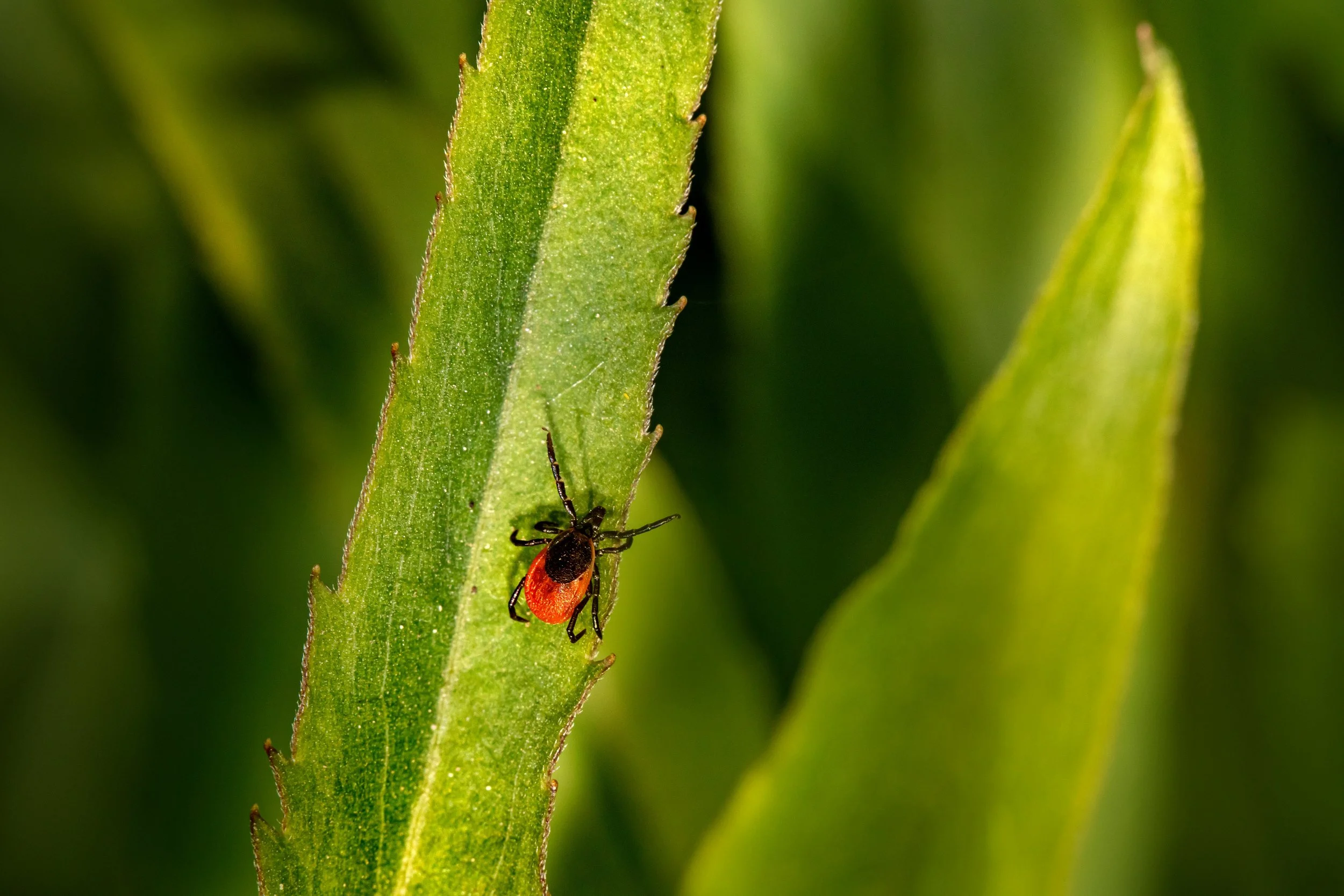
Deer Ticks vs. Dog Ticks
In Maine and New Hampshire, there are several types of ticks, but the one we worry most about is the deer tick, also known as the blacklegged tick. Dog ticks are often easier to spot because they are larger, but deer ticks are smaller and are responsible for most cases of Lyme disease and other tick-borne illnesses in this region.
Ticks can also carry multiple pathogens at once, meaning a single bite has the potential to transmit more than one infection. These may include Lyme disease, Babesia, Bartonella, Anaplasma, Borrelia miyamotoi, and, in rare cases, Powassan virus.
When Are Ticks Most Active?
Tick activity varies across the United States depending on climate, region, tick species, and season. In many areas, ticks can be active any time temperatures are above freezing, so prevention is worth keeping in mind beyond just the warmer months. The CDC notes that blacklegged ticks are widely distributed across the eastern U.S., with the greatest risk of bites occurring in spring, summer, and fall.
Here in Maine and much of the Northeast, nymph ticks are most active from May through July. This is considered a higher-risk time of year because nymph ticks are tiny, easy to miss, and active during the same season when many of us are spending more time outdoors.
In other parts of the country, the timing and primary tick species may look different. For example, Lone Star ticks are widely distributed across the Northeast, South, and Midwest, while western blacklegged ticks are more common along the Pacific Coast.
Adult blacklegged ticks tend to be more active in the fall and early spring, and may search for a host any time winter temperatures are above freezing. Larvae are generally more active later in the summer.
The takeaway: in Maine, late spring and early summer are especially important because nymph ticks are small, active, and difficult to detect. But no matter where you live, it’s helpful to know your local tick season, check for ticks after time outdoors, and stay aware whenever conditions are warm enough for ticks to be active.
How Long Does It Take a Tick to Transmit Infection?
According to the CDC, Lyme disease typically requires more than 24 hours of attachment in most cases. However, ILADS notes that transmission may occur earlier than the commonly cited timeframe and emphasizes that there is no guaranteed “safe” attachment window.
The longer a tick is attached, the greater the risk of transmission. However, transmission may occur sooner than previously thought. This is why it’s important to remove ticks promptly, save the tick when possible, and monitor for symptoms after a bite.
What To Do If You Find a Tick
If you find a tick, taking a few simple steps early can make a big difference.
1. Remove the tick immediately
Use fine-tipped tweezers, grasp the tick as close to the skin as possible, and pull straight out with steady, even pressure. Avoid twisting, burning, using oils, or squeezing the body of the tick.
2. Clean the bite site
Wash well with soap and water, then disinfect the area.
3. Save the tick
Place the tick in a sealed plastic bag or small container. Do not add any liquid. It is okay if the tick dies.
Label the bag with:
Date the tick was removed
Location on the body
Estimated time attached, if known
Tick testing is done using DNA from the tick, so keeping the tick dry and storing it in the freezer can help preserve the sample.
4. Consider tick testing or identification
Testing the tick can provide helpful information about what it may have been carrying and can help guide next steps. Tick testing is not a diagnosis, but it can support more informed conversations with your healthcare provider.
If you’re unsure what type of tick it is, you can take a clear photo and submit it to TickEncounter Resource Center’s TickSpotters service for free tick identification and guidance.
5. Reach out to your healthcare provider
Let your healthcare provider know about the bite. In some cases, early antibiotic treatment may be recommended.
Supportive Tick Bite Protocols
These are supportive measures used early after a bite to help the body respond. They are not a substitute for medical care.
Systemic Support
Echinacea Tincture: 1 dropper, 3–4 times daily for up to 2 weeks
Ledum 30C: 5 pellets, 3 times daily for 3–4 days
Astragalus: follow label dosing or practitioner guidance
Lightning Pearls: 3–4 capsules, 3 times daily for short-term support
Topical Support
Colloidal silver gel
Manuka honey, diluted
Lavender, rosemary, or calendula essential oils in a carrier oil
How to Avoid Ticks
A few simple prevention habits can make time outdoors feel a little easier and more protected.
Common repellent recommendations include:
Permethrin for clothing, shoes, and gear — not for use on skin
DEET or picaridin for exposed skin
Natural options like Cedarcide or 2-undecanone
It’s also helpful to check yourself, children, and pets after spending time outdoors, especially after yard work, gardening, hiking, or time in tall grass or wooded areas. Pay close attention to warm, hidden areas like behind the knees, around the waistband, underarms, scalp, and behind the ears.
A Final Note
Most tick bites do not lead to illness, but staying aware and taking early steps is one of the best ways to protect yourself and your family.
These supportive approaches are intended to help the body respond and are not a substitute for antibiotics or medical treatment, particularly in early or acute cases where medical treatment may be indicated.
If you find a tick, develop symptoms, or have concerns after a bite, consult your healthcare provider.
Sources & Helpful Resources
Centers for Disease Control and Prevention: Tickborne Diseases
CDC: Lyme Disease Transmission and Prevention
University of Rhode Island TickEncounter Resource Center
TickEncounter TickSpotters
University of Maine Cooperative Extension Tick Lab
University of New Hampshire Tick Testing
ILADS: Lyme Disease Guidelines and Educational Resources
IGeneX Tick Testing